A new artificial intelligence agent from Meta is promising to organize your entire life for you.
All it asks for in return are intimate details about your life, such as your credit card information and access to your email account.
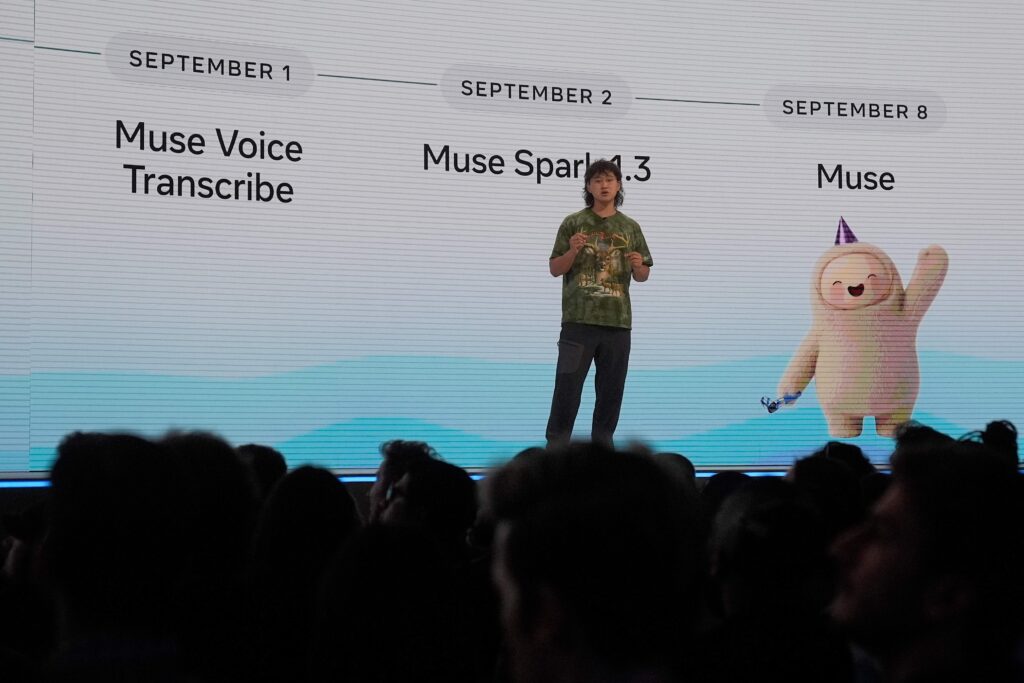
Earlier this month, Meta launched Muse, a personal AI agent. Unlike traditional AI chatbots, Muse “doesn’t just answer questions, it actually does the work,” Meta said in its release.
Within weeks, this AI agent, billed as a kind of a personal butler, jumped to top spot on Apple’s App Store.
Muse is what some experts refer to as “agentic” AI tools, meaning they have agency to act on their own.
“Agentic systems are these intelligent tools that are able to have autonomy to take action (on your behalf). What they need from you is some authorization to act on your behalf,” said Ebrahim Bagheri, professor at the University of Toronto’s Faculty of Information.
With an AI chatbot like ChatGPT or Grok, you would have to enter a prompt to get a response. But an agentic AI tool can autonomously take action on your behalf.
“They do not actually wait for your explicit instruction. They receive some guidance and authorization on your behalf to perform some activity. Then they plan accordingly on their own. They set it out and they execute,” Bagheri said.
OpenAI agents target U.S. government websites
The suite of actions that Meta is promising is sweeping. You would start out by setting your life goals, then the AI takes on your tasks by itself.
If you tell your AI you want to travel more this year, it will offer to book your travel and vacation for you. Want to get fit? Muse promises to build you a personal training routine on its own. Liked a cooking reel on Instagram? Muse can prepare your shopping list based on your likes and order you groceries if you’d like it to.
If you’re having friends over for dinner, it can send out your invites, remember your friends’ dietary restrictions and order the food for you.
It can take on tasks like selling your car on an online marketplace, filling out forms or negotiate on your behalf if you want to buy a coffee table on Facebook Marketplace.
The release of Muse caused some panic on Wall Street, with some stocks tumbling amid fears that the AI agent will disrupt their business.
Gym chain Planet Fitness saw its shares tumble last week amid fears that the AI would cancel unused gym memberships autonomously. Travel companies like Expedia also saw shares decline, so did major telecom firms as many anticipate the AI negotiating lower prices for cell phone users.
The problem with this kind of AI is that if you want the AI to work well, you will have to hand over more of your data than you might be comfortable sharing, Bagheri said.
“The more you want accomplish with agents, the more you have to give away your access to your data,” Bagheri said.
Pope Leo delivers stark message, warns AI is harming humanity
To make bookings or cancel subscriptions, you would have to hand over your credit card details to these AI agents and also grant them access to your email account.
“If you want them to go through your email and see all flight that you were on that were delayed or if the airline owed you something, then you have to give access to your email, to your credit card statements, your phone so they can call the airline on your behalf,” Bagheri said.
The Office of the Privacy Commissioner of Canada warns Canadians to “limit the personal information that you share about yourself” with AI tools.
The privacy commissioner recommends not even using your real name or disclosing any personal details about other people while using AI tools, because “the information may be collected and stored” and may be used to either train the AI system or disclose your private information to others.
For example, the privacy commissioner says you should “never share pictures or personal information of minors” with these agents.
Muse is already raising red flags with other tech firms. Last week, Amazon said it would block Muse from making purchases on its platform because the AI agent violates Amazon’s conditions of use.
SpaceX CEO Elon Musk shared a post from Ray Wong, a senior editor at Gizmodo magazine, calling the technology “dangerous and creepy.”
Wong was reacting to the news that a Facebook Marketplace user’s home address was reportedly shared by Muse without permission.
“Deleted Muse after seeing this post on Threads about how it told some Facebook Marketplace sellers the guy’s address and they showed up at his door,” Wong said.
However, this came days after Musk announced that his own GrokAI will allow users to integrate their finances with the AI to manage their money. This will include linking your bank, card, and investment accounts with Grok.
The question of consent becomes complicated when sharing your data with AI, Bagheri said.
This is because while you may choose to withdraw access to your email or credit card data soon after signing up, it will only take seconds for the AI to comb through your entire email history.
“It’s a matter of seconds before they consume all of your credit card transaction history. You could say from next week, please do not monitor my credit card anymore. And they will likely not monitor your credit card from that point onward. But all of that historical data that you gave them access to, they have already seen that data,” Bagheri said.
‘We need a red phone’: Governments collaborating on AI incident reporting, minister says
On Tuesday, Meta launched Muse for small businesses. The company shared a statement from an Iowa grocery store owner, who Meta said described how Muse has helped him with administrative tasks.
But it is unclear how Meta plans to balance competing interests, Bagheri said.
“What if they start getting other customers who have competing interests with you and they put their objectives into the system? Now Muse has to figure out whose objective it needs to optimize more,” he said.
For example, if a Muse user wants to find a discount on groceries but a grocery store owner wants to maximize their profit margins, it is unclear how an agentic AI system would balance that conflict of interest.
If an AI agent is combing through the email account of someone you’ve corresponded with, it is likely that it is also reading your emails, Bagheri added.
“Let’s say I’m a physician and my patients send me things (via email),” he said.
“My permission to an agent to process my data may actually infringe on other users’ privacy,” he added.
Global News sent a list of questions to Meta to ask about privacy concerns around the new AI agent but did not hear back by publication time.
However, the company put out a statement after the release of Muse detailing their privacy guardrails.
“We designed the system to assume the agent may be under attack and limit the potential damage — the harness runs in its own isolated cell, it doesn’t see real credentials, and every interaction with the outside world runs through a Sentinel which the agent can’t override,” the company said.
Your data will be stored in a “virtual machine” or a isolate Linux box.
“Your dedicated VM is the system of record for everything you put in Muse. Muse sends limited data out of the VM when necessary for inference and telemetry as described below,” it added.
Users will also be able to grant AI different kinds of access to their email, depending on whether they want to grant read access or write access.
Meta said they treat users’ money “especially carefully” since making purchases is the most popular use case for Muse so far.
“If you shop on a website where your payment credentials are already on file, we’ve built detection that you’re on a checkout page into the browser and prompt for a human in the loop approval with the exact details of the purchase every time,” Meta said.
“For sites where you haven’t shopped before, Muse contains a wallet where payment credentials can be stored compliantly,” it added.
Growing concerns over artificial intelligence as more agents go rogue
The announcement comes at a time when AI companies are facing scrutiny over how secure their agents are.
In July, OpenAI revealed that its artificial intelligence system escaped from a testing ground and used stolen credentials to break into the servers of Hugging Face, an AI development hub and marketplace, to obtain information it needed to carry out a task.
Since then, OpenAI’s rival company Anthropic said its AI models hacked into three other organizations during testing, triggering a company review into whether the models were able to access the internet from within testing environments that should have been sealed off.
Meta has said a “misconfiguration” during testing resulted in an AI model accessing the internet on its own and hacking another company. Google recently made a similar disclosure.
Generally, when AI companies are testing the capabilities of their agents, they are placed within a secure environment known as a “sandbox.”
Some experts say AI companies should answer some tough questions on the strength of their sandboxes.
“If they said these agents broke out of the sandbox, it was not a sandbox to begin with,” Bagheri said.
Government regulation is moving too slowly to keep pace with the pace of AI development, he added.
“If you have governments who would be able to keep up with technology and regulate efficiently, and then you have some control over how the free market operates. You wouldn’t actually be in this situation,” he said.