

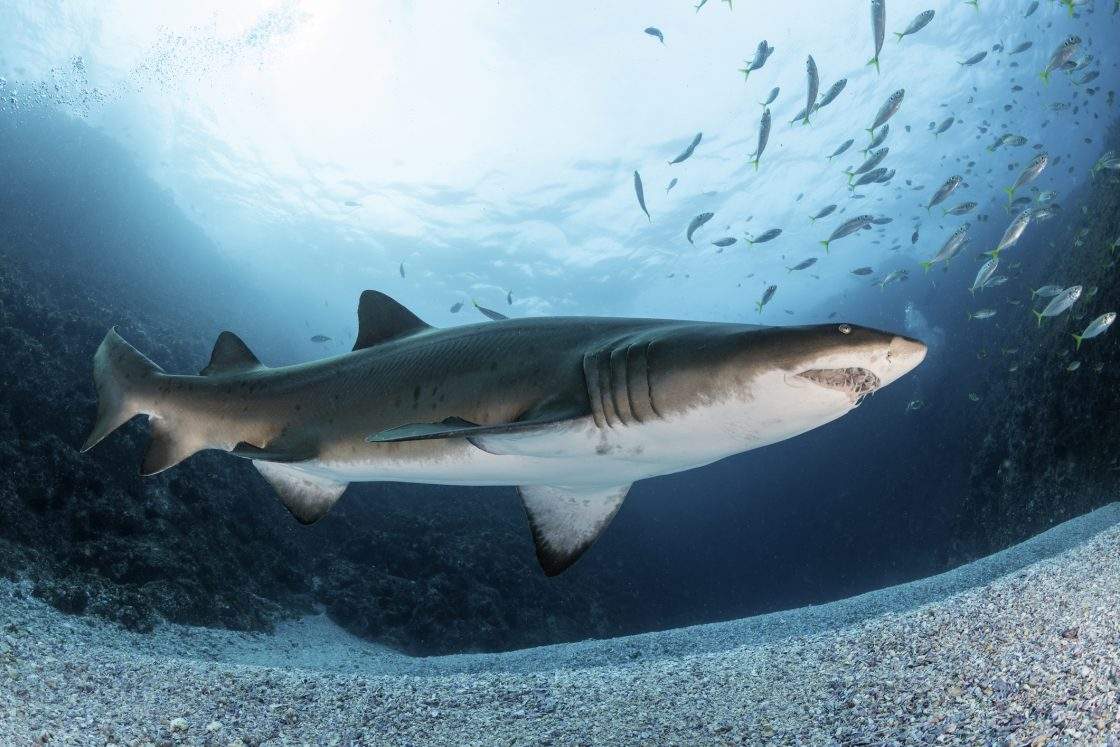
Viral footage of a social media personality being bitten on the leg by a shark is prompting discussion about a possible rise in the number of attacks among influencers pursuing epic underwater moments with the species.

Tayane Dalazen, a 37-year-old Brazilian lawyer and influencer, was on a shark-diving excursion in the country in April when a seven-foot-long nurse shark — which are generally known for being docile — circling close to the water’s surface sank its teeth into her thigh. The incident was caught on camera, and Dalazen posted it.
In the short video, Dalazen can be seen snorkelling with several others near a boat’s stern, as a shark swims directly toward her.
“When the shark bit me, the pain was very strong,” she told the BBC. “I stayed calm because I knew I couldn’t fight the animal.”
After clinging to her thigh for several seconds, the shark loosened its grip, leaving Dalazen with a series of lacerations.
The Brazilian influencer wrote in the video’s caption that the incident occurred when she was taking part in a Discovery Channel documentary which aired in July.
While shark bites on humans are very rare, a 2020 study at the University of Technology in Auckland noted an increase in trends such as the ‘wildlife selfie,’ which it says requires close proximity to unpredictable animal species and has been gaining popularity in a way that may “contribute to wildlife harassment” or provoke animal behaviour that could “pose a hazard for people.”
In July, fishing influencer Henry Gibbs was creating content in Fiji and almost lost his leg after being bitten by a reef shark.
Similarly, in February last year, a Canadian tourist in Turks and Caicos lost both her hands while trying to get a photograph of a bull shark.
In April of 2025, the remains of a snorkeler in Israel who was reportedly swimming with a “selfie stick” were found after being killed by sharks while trying to snap photos, the BBC reported.
The New Zealand study also found that influencers and photographers were most likely to ignore safety instructions during shark-diving expeditions, though shark attacks are still extremely uncommon.
The University of Florida’s International Shark Attack File (ISAF) reports that the odds of being bitten by a shark are incredibly low. ISAF recommends ocean swimmers stay close to shore, avoid swimming at dawn or dusk and avoid excessive splashing.
The ISAF investigated 105 alleged shark-human interactions worldwide in 2025, with five total cases coming from the Bahamas.
ISAF confirmed 65 unprovoked shark bites on humans and 29 provoked bites, which occur when a human initiates interaction with a shark in some way.
The 2025 worldwide total of 65 confirmed unprovoked cases is in line with the most recent five-year (2020 to 2024) average of 61 incidents annually, according to the ISAF.
© 2026 Global News, a division of Corus Entertainment Inc.