

As Canadian students return to the classroom, some have to plan how to deal not just with school work but allergies.

More than 600,000 children under 18 have a food allergy, according to Food Allergy Canada.
That means many enter or return to school having to take precautions to ensure they stay healthy while learning.
Dr. Samira Jeimy, an allergist in London, Ont., said for a child with allergies, entering the classroom can add to an already stressful time.
“That increased stress from the flux and the transition can definitely impact allergic and immunologic disease,” she said. “And then there’s the new or changing exposures that happen in September.”
A food allergy occurs when a person’s immune system, which normally protects from germs and diseases, mistakenly treats a food substance as dangerous. According to Food Allergy Canada, the body then reacts to the food by having an allergic reaction.
When first exposed to the allergen, which is often the protein found in the food, the immune system creates antibodies called immunoglobulin. When the person is exposed again to the protein, antibodies and chemicals such as histamine are released.
Histamine can cause a reaction in a person’s respiratory system, gastrointestinal tract, skin or cardiovascular system, Health Canada says.
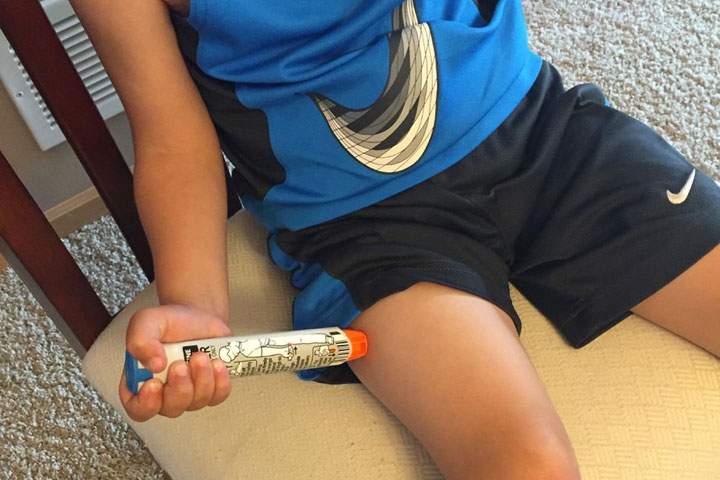
In some cases, the allergy can cause anaphylaxis that starts rapidly and can be fatal. People who are at risk of anaphylaxis are advised to carry an epinephrine device such as an EpiPen, which can treat an allergic reaction.
That’s why Jeimy said as kids go back to school, parents should discuss how to deal with allergies with students and their teachers.
This includes reviewing inhaler usage, which helps with allergic asthma, a condition that can arise during a reaction.
“We always anticipate a lot of asthma exacerbations when school starts,” Jeimy said. “Really knowing when to use your inhaler, how to use the inhaler, when to escalate therapy and when to seek extra help is super important because colds and flus are huge, maybe the number one trigger for asthma exacerbations.”
It’s important to also remind children and teens how to properly use their EpiPen should a reaction occur.
“These life-threatening outcomes are totally preventable if people are educated, the students have the EpiPen on them, they know what symptoms to look out for, it’s administered properly,” said Dr. Allan Grill, chief of family medicine at Markham-Stouffville Hospital.
Most allergic reactions can happen within minutes, but some can take longer. They can also start with mild symptoms but get worse quickly.
The symptoms can involve the heart, lungs, throat, stomach, skin and other parts of the body. They can range from feeling faint or dizzy, a weak pulse, shortness of breath, wheezing, widespread hives, severe itching, severe abdominal pain, or severe swelling of the face or eyes. In some cases, a severe allergic reaction or anaphylaxis can also cause confusion, agitation and decreased activity.
Grill said people should know the warning signs and parents should remind their children to get back in the habit of safe routines.
“It’s really important to remind your child that has allergies not to share any food or drinks with other students in the class [and] to only be eating and drinking the things that you bring from home,” he said.
Even a small amount of an allergen that makes it onto a fork or knife through cross-contamination can cause an allergic reaction, Food Allergy Canada says, which is why more education is always helpful.
“It is about being familiar with food allergy being a serious medical condition,” said Jennifer Gerdts, executive director of Food Allergy Canada. “What we do know when we hear from the community is when a plan is in place, it’s been discussed, and people are aware of the food allergy, the kids feel confident.”
—with files from Global News’ Katherine Ward
© 2026 Global News, a division of Corus Entertainment Inc.